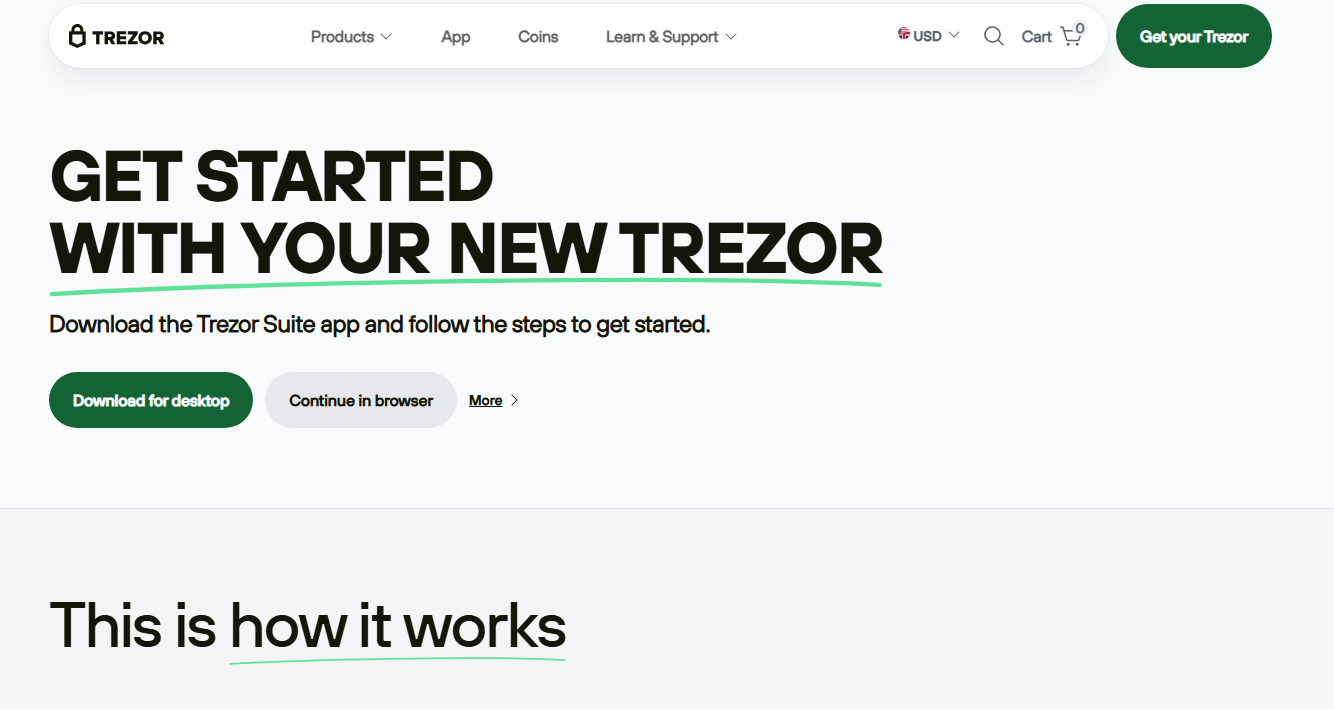
Managing cryptocurrency can be powerful and rewarding — but only if your digital assets are secure. Crypto removes banks and intermediaries from the process, which means you control your money. This independence is exciting, but it also means you are fully responsible for safeguarding your keys and funds.
One of the most trusted ways to protect crypto is with a hardware wallet. Trezor is a leading brand in secure self-custody, known for its open-source design, transparent security model, and ease of use. At the heart of the Trezor experience is Trezor.suite — the official software that lets you manage your wallet, interact with different blockchains, and keep your assets safe.
In this comprehensive guide, you’ll learn what Trezor.suite is, how it works, why it matters, and how to use it step by step — whether you’re setting up a brand-new wallet or exploring advanced crypto features.
Trezor.suite (often called Trezor Suite) is the official desktop and web software that connects your Trezor hardware wallet to the cryptocurrency world. Think of it as your secure dashboard — a place where you manage accounts, send and receive crypto, monitor balances, update firmware, and connect with external services.
Unlike random wallet apps that can be fake or infected with malware, Trezor.suite is:
• Official software developed by Trezor
• Free to download and use
• Designed to work exclusively with Trezor hardware wallets
• Built to keep private keys offline while enabling easy management
Trezor.suite bridges your secure hardware wallet with the blockchain networks, making self-custody both powerful and user-friendly.
In the crypto world, private keys are everything. Your private keys are the cryptographic proof that YOU own your crypto. If they’re lost, stolen, or exposed to malware, your funds can be gone forever. Trezor.suite matters because it provides:
• A secure interface to manage multiple crypto assets
• A gateway to decentralized finance (DeFi) and Web3 services
• A verified environment that connects directly to your hardware wallet
• Built-in safety checks before transactions are signed
• Regular firmware updates to enhance security and features
By using Trezor.suite, you reduce your exposure to phishing attacks, fake apps, and software vulnerabilities — because your keys never leave the hardware device itself.
When you use Trezor.suite, your hardware wallet remains offline and isolated. The software displays account balances, transaction history, and network fees, but it never stores private keys on your computer. Instead, Trezor.suite sends instructions to your Trezor device, which then:
This means that even if your computer is compromised, the hardware wallet keeps your keys safe. The software acts as a secure channel between your hardware device and the blockchain.
Trezor.suite enables a wide range of features:
You can create and manage wallets for Bitcoin, Ethereum, Litecoin, and many other supported cryptocurrencies — all from one interface.
Trezor.suite lets you generate receiving addresses, send transactions, and check confirmations with full transparency.
Keeping firmware up to date is essential for security. Trezor.suite provides official firmware updates to ensure your device remains protected against vulnerabilities.
Track real-time balances, historical activity, and asset values in one place without exposing private keys.
Through Trezor.suite, you can interact with supported decentralized applications (dApps), decentralized exchanges, and blockchain services while keys remain offline.
Optionally, you can configure a passphrase to add another protective layer to your account — making it more secure against physical loss or theft.
Trezor.suite works with all official Trezor hardware wallets:
A dependable and reliable wallet supporting many major cryptocurrencies.
A premium wallet featuring a color touchscreen, broader asset support, and enhanced usability.
Both models connect to Trezor.suite and benefit from the same secure software experience.
Let’s walk through the complete setup process from start to finish.
Before you do anything, make sure your Trezor device arrives in sealed packaging and is not preconfigured. Trezor hardware should never come with a recovery seed pre-written or any pre-set PIN.
Open your browser and go to trezor.io/start. This official page will guide you to the correct Trezor.suite download link — don’t trust random search results or ads.
Choose the appropriate version for your operating system:
• Windows
• macOS
• Linux
Install the Trezor.suite application and open it.
Using the USB cable, connect your Trezor Model One or Model T to your computer. Trezor.suite will detect the device automatically.
Trezor.suite will prompt you if a firmware update is available. Installing firmware updates is critical — they fix security issues and add new features.
If you are setting up a new device:
Your recovery seed is your ultimate backup — without it, funds can be unrecoverable.
Trezor.suite will ask you to confirm selected seed words to ensure you copied the recovery phrase correctly.
Once setup is complete, you can explore all features:
• Add cryptocurrency accounts
• Receive funds securely
• Send transactions safely
• Track balances and performance
• Update your hardware firmware
• Connect to supported Web3 tools
Everything you do with Trezor.suite keeps your private keys offline and protected.
Trezor.suite is designed with security front and center. Some key benefits include:
Your keys never touch your computer or the internet.
Transactions must be confirmed on the hardware wallet itself.
Trezor.suite verifies firmware signatures before updates.
By using official downloads only, you avoid fake wallet software.
Trezor’s code is publicly auditable, allowing community review and validation.
Sending crypto with Trezor.suite involves:
This physical confirmation outside the computer interface ensures that malware cannot override or manipulate transaction details.
Once you get comfortable with basic wallet management, Trezor.suite lets you:
Passphrases are an optional extra security layer that creates “hidden wallets” tied to your recovery seed.
Connect to decentralized finance services through supported interfaces while keeping keys protected.
Some networks and integrations allow Trezor.suite to display and manage non-fungible tokens.
Trezor.suite supports safe interactions with selected third-party applications, expanding your ecosystem access while keeping keys offline.
If your hardware wallet is lost or destroyed, your crypto isn’t gone — as long as you safely backed up your recovery seed.
To recover:
Your accounts and balances will reappear once the seed is entered correctly.
If someone gains access to your recovery seed, your funds may be at risk. In that case:
This ensures that even if a phrase was exposed, the hacker cannot access the new wallet.
FeatureTrezor.suite (with Hardware Wallet)Software WalletPrivate keys offlineYesNoProtection against malwareVery highModeratePhysical transaction approvalYesNoBest for storing large balancesYesNoRecovery protectionStrongVaries
Hardware wallets with Trezor.suite are widely recommended for serious crypto holders.
Even with strong security tools, users can make mistakes. Here’s what to avoid:
Never store your recovery seed in a photo, cloud, email, or notes app.
No legitimate service or support team will ever ask for your seed.
Always download Trezor.suite from trezor.io/start.
Firmware updates often fix vulnerabilities — skipping them is risky.
Is Trezor.suite free to use?
Yes. The software is free; you only pay for the hardware wallet.
Can Trezor.suite be used without a hardware wallet?
No. Trezor.suite must be paired with a Trezor hardware device to secure private keys.
Does Trezor.suite work on mobile devices?
Currently, Trezor.suite is primarily designed for desktop use, though some integrations may support advanced mobile workflows.
Can I manage NFTs with Trezor.suite?
Yes, depending on the blockchain and supported integrations.
Is Trezor.suite safe?
Yes. When downloaded from the official site and used with a hardware wallet, it provides one of the most secure crypto management environments.
Trezor.suite is ideal for:
• New crypto users who want secure wallet setup
• Long-term holders securing large balances
• DeFi participants interacting with decentralized finance
• NFT collectors seeking hardware security
• Advanced users needing multiple accounts
• Anyone serious about self-custody
If you care about keeping control of your assets without exposing them to unnecessary risk, Trezor.suite is a core part of that strategy.
Trezor’s reputation is built on:
• Open-source transparency
• Independent security audits
• Continuous firmware updates
• User-friendly design
• Strong community trust
Trezor.suite reflects this philosophy by combining security and usability.
Self-custody is powerful — but only when done right. Trezor.suite gives users a secure, verified platform to manage wallets, sign transactions, explore DeFi, and interact with the blockchain — all without exposing private keys.
By pairing Trezor.suite with a hardware wallet, you embrace one of the best security models available in crypto today. Whether you hold Bitcoin, Ethereum, NFTs, or DeFi tokens, Trezor.suite helps you control your assets with confidence.
If protecting your crypto matters — don’t leave it to chance. Start with Trezor.suite and build a secure foundation for your digital financial future.